
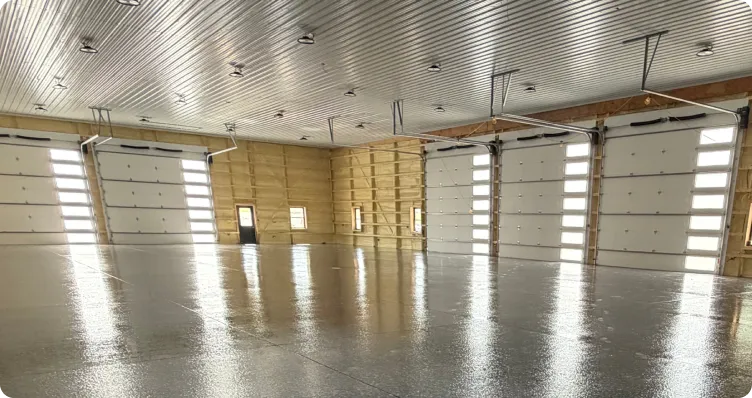
Define the available window beyond opening hours
If the business has a weekend, overnight or planned maintenance break, list the tasks that still need access during it. Deliveries, cleaning, equipment servicing and setup may compete with floor preparation. The useful window is the time the room can actually remain clear and controlled.
Identify the first activity required afterward, including its loads and cleaning exposure. Returning employees on foot is different from bringing in heavy equipment or beginning a wet process. Those distinctions help evaluate options before a reopening target becomes a promise.
Find out whether the substrate fits the proposed schedule
Show peeling coatings, cracks, stains and damp areas early in the discussion. Existing material removal, moisture concerns or repairs can affect the scope independently of curing speed. The concrete needs assessment before fast turnaround can be meaningfully discussed.
Clarify what must be moved and who is responsible. Identify fixed equipment, shared entrances and utilities. If other work may expose additional floor conditions, coordinate that inspection before the closure so preparation assumptions are as clear as possible.
Compare speed with the complete system requirements
Fast-cure systems can be considered where suitable, but the name does not establish a fixed completion time. Discuss the selected build, site conditions and readiness for the actual operation. A staged approach also needs usable routes that avoid work in progress.
- Agree on milestones for clearing, preparation, application and curing.
- Review the floor before equipment and stock return.
- Communicate reopening instructions to everyone with access.
- Keep product-specific cleaning guidance and a record of the installed materials.