
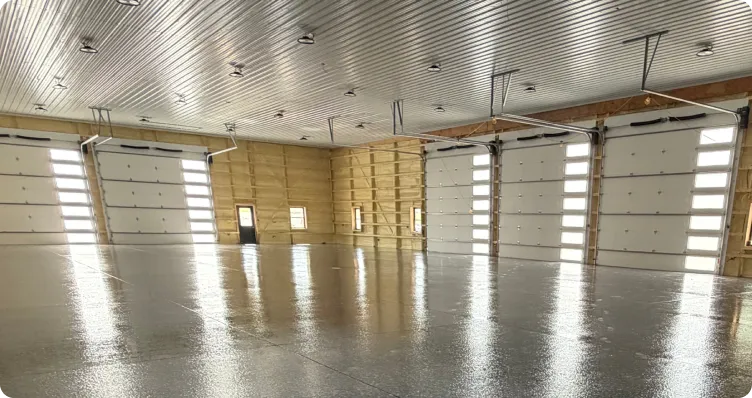
Describe equipment in both storage and service
A room may hold equipment quietly for long periods but experience heavier use during loading, inspection or maintenance. Identify those activities and the routes between them. Include wheels, support feet and temporary work positions when describing the demands on the floor.
Explain what comes indoors with returning equipment, such as grit, water or other material. Describe how it is removed and where cleaning occurs. These details help evaluate texture and product suitability without assuming that every equipment-storage room needs the same floor system.
Inspect beneath parked and stored items
Photograph the room before clearing it, then arrange access to representative concealed areas. Show staining, old coating, damaged joints and any history of dampness. The concrete condition determines preparation and suitable repairs before a finish is selected.
Decide whether storage positions will remain fixed. If equipment is likely to move, clarify how formerly covered areas will be treated. Identify fixtures that cannot be relocated and make their coating boundaries explicit in the estimate.
Coordinate the return with the operating calendar
Share when equipment must be available and where it can stay during installation and curing. An apparently quiet period may end with several heavy items returning together. Confirm the actual return-to-use milestone for those loads and moving methods.
- Keep necessary supplies outside the closed work area.
- Review edges and repair details before equipment conceals them.
- Agree on cleaning methods for tracked debris and spills.
- Keep the selected product's care guidance available to equipment users.