
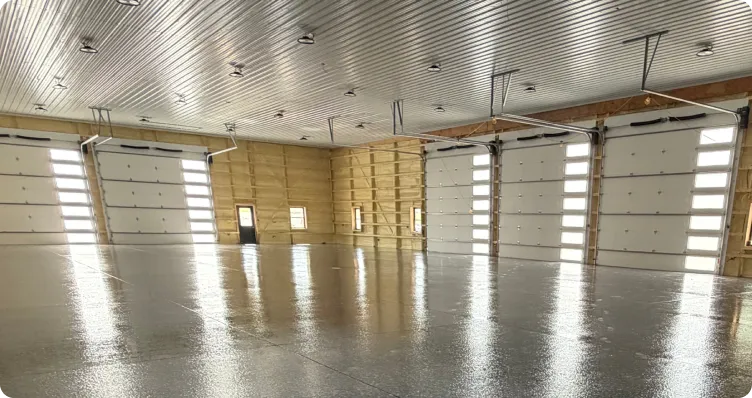
Identify the work that reaches the floor
If the room is used for repair or maintenance, list fluids, debris and parts that may contact the concrete. Explain whether spills are occasional or part of normal work, and identify where equipment is dragged, rolled or set down. These details are more useful than describing the space only as a shop.
Show heavy-use positions separately from quieter storage. A uniform appearance may be possible while the underlying preparation needs vary. Ask how the proposed system addresses the stated exposure rather than relying on a broad claim of industrial durability.
Use the equipment layout to define access
Fixed machines, bench legs and tool cabinets can leave narrow strips that are difficult to inspect or prepare. Identify what can move, who handles relocation and whether any servicing must occur first. Agree on untreated footprints if equipment will remain.
Inspect stains, cracks, old coating and joint damage around the working positions. Share any history of unsuccessful repairs. The concrete and contamination need assessment before choosing suitable preparation and a new finish; a fresh coating should not simply conceal an unresolved problem.
Coordinate a shutdown with the maintenance schedule
If machinery is already coming out of service, discuss whether flooring can fit the same closure. Identify the last task that could contaminate the slab and the earliest need to place equipment back. Keep those activities separate from the coating application date.
- Remove loose tools and parts before preparation begins.
- Review repairs and boundaries while the room is empty.
- Confirm readiness for machinery and rolling loads, not just walking.
- Retain approved cleaning and spill-care instructions for the selected products.