
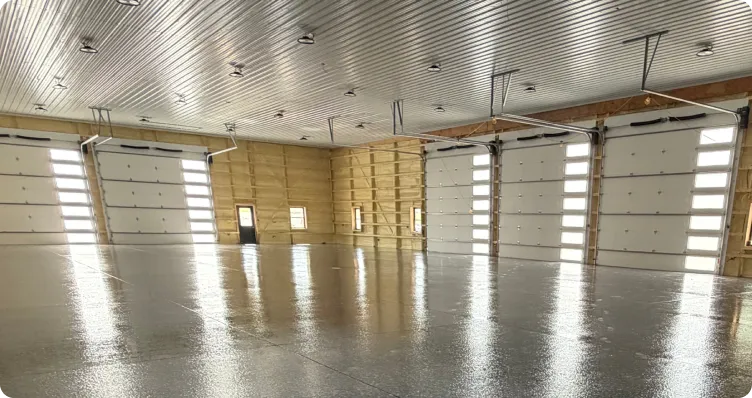
Explain how the building behaves when it is empty
A workshop or storage building that is opened only occasionally may have different conditions from a continuously occupied room. Describe heating, cooling, door use and any history of condensation or dampness. Do not assume an empty calendar means the concrete is ready for coating.
Tell us what happens during the busiest use: equipment movement, supplies being unloaded or a period of intensive bench work. Those activities help determine the system requirements even when the room is quiet most days. The coating should be selected for actual exposure, not average occupancy.
Prepare for a useful visit to the property
Provide the exact address, entrance and a contact who can explain the room. Photograph the slab before moving stored items, then identify areas requiring closer inspection. Old paint, cracks, contamination and moisture concerns may require different preparation decisions.
Confirm available utilities and the conditions that can be maintained through installation and curing. If building systems are switched off when staff leave, discuss that practice before dates are set. Product requirements and site conditions need to be considered together.
Manage the first use after a closure
An infrequently used room may reopen all at once when equipment or inventory arrives. Identify that first activity and its loads, rather than requesting only a date for walking access. Discuss who checks the room and receives the handover instructions while the building is otherwise unoccupied.
- Keep the space protected from unplanned entry during curing.
- Confirm when stored goods and rolling equipment may return.
- Review edges and agreed repairs before the room fills.
- Maintain the installed surface using its product-specific cleaning guidance.