
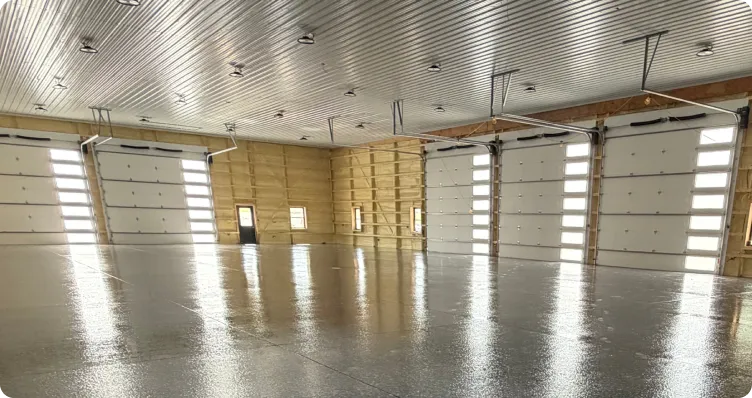
Describe each arrangement of the room
If tables, displays or movable seating regularly change position, show the common layouts and where items are stored. Identify routes used by setup crews and carts. Concentrated movement at a storage door may matter as much as traffic across the main room.
Include any temporary mats, coverings or equipment placed on the floor. Their compatibility and use should be checked with the selected system's instructions. A coating is not automatically a substitute for a specialized activity surface or the requirements of equipment used in the room.
Treat setup days as occupied time
The gap between bookings may include deliveries, decoration, rehearsal or cleanup. Put those activities on the project calendar before identifying a work window. A date that appears available to management may already be committed to people preparing the next event.
Discuss the full sequence: removing furnishings, assessing exposed concrete, preparation, application, curing and setting the room up again. If the available interval is tight, review feasibility before accepting another booking. A faster-curing option cannot eliminate repairs or preparation that the floor needs.
Compare appearance under ordinary operating conditions
Review samples with the room's normal lighting and furnishings. Discuss gloss and texture alongside cleaning, spills and the movement of chairs or carts. Flake and solid color finishes offer different appearances where suitable; choose with daily care in mind, not only the room's first presentation.
- Photograph existing wear near storage and service doors.
- Identify furniture feet and wheels that contact the floor.
- Agree how thresholds and adjoining surfaces will be treated.
- Keep product-specific care guidance with the room setup instructions.
Prepare the team that resets the space
The people moving furniture after installation should know when and how that work can begin. Obtain guidance for protection, cleaning and the selected materials. Record the system and agreed handover so future staff do not have to guess which products or temporary coverings were considered suitable.