
Use the quiet period to plan the whole interruption
If customer traffic varies by day or season, identify the activities still happening when the business appears quiet. Deliveries, stock preparation and equipment servicing may need the same room. A useful closure window accounts for those tasks as well as the next public opening.
Describe the proposed floor area and how it operates during the busiest period. Include waiting customers, service carts, dropped materials and spills. These details help select a coating for actual demands without assuming that occasional use means light duty.
Clear the space with the next setup in mind
List furnishings and supplies that must leave, then choose storage that will not block installer access. Decide which items should return first and whether they require wheeled handling. Setup may place heavier loads on the floor than ordinary customer use.
Inspect the exposed concrete for previous finishes, cracks, staining and damp spots. Share available records and arrange access to areas normally hidden by stock. Preparation and repair requirements should be resolved before a reopening date is treated as fixed.
Coordinate the first cleaning and first customers
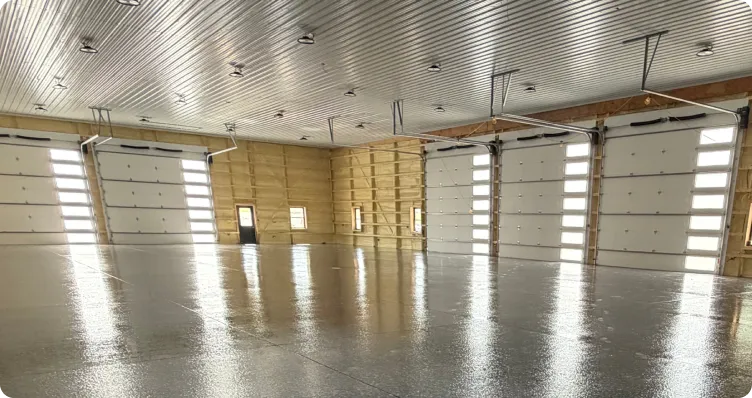
Compare finish options alongside the cleaning routine used after a busy day. A decorative flake surface and a textured system can have different care needs depending on their complete build. Ask for product-specific guidance rather than relying only on the sample's appearance.
- Confirm milestones for setup, cleaning exposure and customer traffic.
- Review transitions and coating boundaries before furnishings return.
- Inform anyone with independent access when the room must remain closed.
- Retain care instructions for staff who work only during busy periods.