
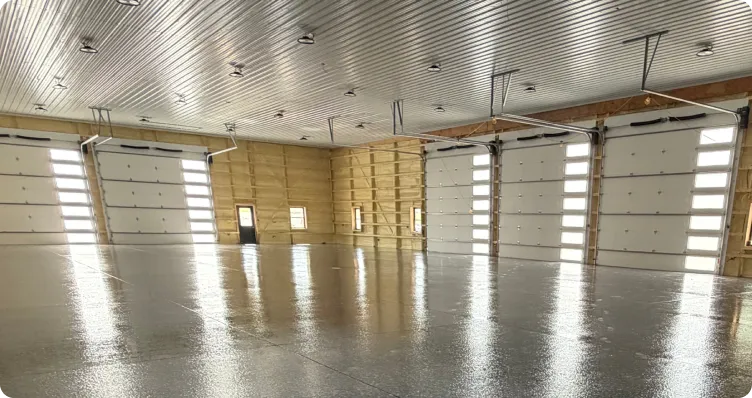
Describe the building when no one is there
If the space is opened only for storage access or occasional work, explain how its temperature and ventilation are managed. Report any condensation, dampness or coating failure that occurs between visits. A dry appearance on inspection day may not represent every condition the floor experiences.
List the activities that happen during a typical visit and the heaviest items moved. Include stored materials that may leak or spill. The proposed system should be evaluated for these actual uses rather than for the number of hours the room is occupied.
Arrange access that supports the whole sequence
Identify the correct entrance, key holder and available utilities. Show where equipment and materials can be unloaded without blocking the work area. Confirm who can respond if access or a previously hidden floor condition needs a decision.
Photograph old coatings, cracks and repairs before stored items are cleared. Arrange inspection of representative concealed areas. Suitable preparation and the conditions needed during application and curing must be agreed before the room is simply left unlocked for installation.
Give reopening responsibility to a named person
An unattended building may first be used again by someone returning heavy stock. Make sure that person receives the actual return-to-use instructions. Agree on a walkthrough while the floor is visible and before storage makes its edges inaccessible.
- Keep unplanned visitors out during the agreed closure.
- Confirm readiness for shelving and loaded equipment separately from walking.
- Retain cleaning instructions where future users can find them.
- Document treated boundaries and any excluded footprints.