
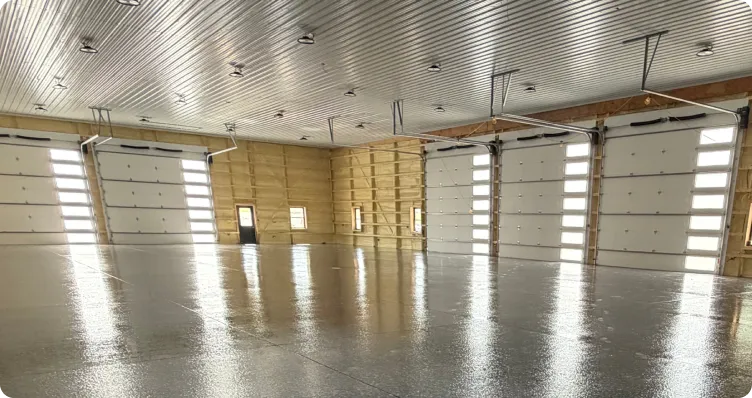
Separate receiving from customer collection
Mark where deliveries are unloaded, checked and stored before goods reach the customer. If a counter or pickup point shares that route, identify the times when activity overlaps. The coating discussion should reflect each area's traffic and likely spills rather than treating all square footage alike.
Explain whether packages move by hand, trolley or other equipment. Include sharp turns, doorway thresholds and the place where loaded items are set down. Those details can influence the preparation and system assessment, as well as decisions about transitions between adjoining rooms.
Create a workable temporary receiving plan
A business may be able to close its customer room while still needing a place to receive stock. Identify a temporary location before choosing installation dates. Confirm it can be accessed without crossing the work area or obstructing the preparation equipment's route.
If deliveries cannot be diverted, discuss the constraint openly. A divided installation may be practical in some layouts, but it requires deliberate boundaries and enough room to work. Do not assume a narrow strip left open will meet the needs of both the business and the installation.
Choose the visible finish and the working surface together
Flake and solid color systems can provide different looks for suitable interiors. Consider the appearance from the customer counter and the demands behind it. Discuss texture, cleaning and any marking materials separately so a decorative decision does not obscure functional requirements.
Point out worn concrete at the receiving door, existing coatings and areas exposed to water or chemicals. Agree on what preparation and repairs are included before comparing finishes or reopening targets.
Schedule the first delivery after installation
Confirm the approved milestone for the relevant handling equipment and protect the surface as instructed when fixtures return. Arrange for someone to receive the care information and communicate it to staff, carriers and anyone setting up the space.
- Reschedule deliveries that would force premature access.
- Identify who authorizes the return of loaded equipment.
- Keep an alternative collection arrangement until the area is ready.